Monday, November 23, 2015

Virgil's 'Puer'


It is lately fashionable to deemphasize the uniqueness of Christianity, and of Jesus’s Messiahship, in part by arguing that the Romans had a “messianic tradition.”

For instance, in the Crash Course video on Christianity, narrator John Green speaks about a coin depicting Emperor Augustus, saying: “So let’s just state at the outset that in 4 B.C.E. being the son of God, or at least being the son of a god, was not such an unusual thing.”[i]

Claims about this supposed “Roman messianic tradition” are varied. Presently, I will focus upon two main questions. Did the poet Virgil write a Messianic prophecy? And was a Roman named Asinius Gallus a competitor (of sorts) with Jesus of Nazareth for the title “Messiah”?

In order to answer these two questions, let us establish a bit of groundwork.

Firstly, who was Virgil and what was the “prophecy” in question?

Virgil (also sometimes spelled Vergil) was the name of one Publius Vergilius Maro, a Roman poet born in 70 B.C. and who died in 19 B.C., during the early part of the reign of Caesar Augustus. Virgil is best-known for the Aeneid, an epic poem that had to associated ancient Rome with the fabled kingdom of Troy.

Virgil’s Fourth Eclogue is part of a collection of bucolic poetry (the Eclogues), and is expressly addressed to a person named “Pollio.”[ii]

The next question is obvious: Who was Pollio?

From Wikipedia:

“Gaius Asinius Pollio (…75 BC-AD 4) was a Roman soldier, politician, orator, poet, playwright, literary critic and historian… Pollio was most famously a patron of Virgil and a friend of Horace and had poems dedicated to him by both men.”[iii]

Under the subheading “Role in the Civil War,” we read:

“Pollio vacillated between Mark Antony and Octavian as civil war between them brewed,[iv] but ultimately threw in his lot with Antony.[v] …In the division of the provinces, Gaul fell to Antony, who entrusted Pollio with …[particular] administrati[ve duties] …[vi]

“In superintending the distribution of the Mantuan territory amongst the veterans, he used his influence to save from confiscation the property of the poet Virgil. In 40 BC he helped to arrange the peace of Brundisium by which Octavian and Antony were for a time reconciled. In the same year Pollio entered upon his consulship, which had been promised him in 43 BC by the Second Triumvirate. Virgil addressed the famous fourth eclogue to him, though there is uncertainty regarding whether Virgil composed the poem in anticipation of Pollio's consulship or celebrating his part in the Treaty of Brundisium. Virgil, like other Romans, hoped that peace was at hand and looked forward to a Golden Age under Pollio's consulship.”[vii]

If the 4th Eclogue was literally addressed to Pollio, then it is reasonable to suppose that the puer (Latin for “boy” or “child”) spoken of in the poem – insofar as any actual person is intended – is a son of Pollio.

Indeed, scholar Elizabeth Denny Pierce writes that such is “[t]he generally accepted tradition”:

“The generally accepted tradition that the child was a son of Asinius Pollio is doubtless due to the fact that the latter is the only mortal referred to by name in the poem and also to the story of Asconius that Asinius Gallus, the son of Pollio, asserted that he (Gallus) was the puer of this Eclogue.”[viii]

Pierce continues: “Asinius Gallus was the eldest son of Pollio, and was born in 39 B.C. …As his brother Herius Asinius died when a boy, Asinius Gallus was the only son left to succeed his father. …As he had incurred the ill-will of Tiberius not only by his marriage but by certain remarks made in the Senate[ix] he was condemned in 30 A.D., but kept in prison until his death by starvation in 33 A.D. Since Augustus when considering possible successors to the principate had discarded him as one who had ambition but inferior ability, and had chosen Tiberius instead, there had been friction between the rivals [that is, Asinius Gallus and Tiberius]. Gallus's marriage to Vispania after Augustus had forced Tiberius to divorce her, had been another reason for hostility. There is evidence that Gallus had made himself as disagreeable as he could to the second princeps, and it would have been perfectly possible for him to add to the emperor's unpopularity by spreading the story that he himself had been destined to be the saviour of the world.”[x]

This information is in no way “dated.” Readers may compare Fabio Stok’s comment:

“…Asconius recorded (according to Serv. Dan. ad Ecl. 4.11) that the son of Asinius Pollio declared to Asconius that he himself was the puer celebrated in the fourth eclogue.”[xi]

Notice the parenthetical citation. Stok cites “Serv. Dan. ad Ecl. 4.11.”[xii]

“Servius” designates the “late fourth-century and early fifth-century grammarian” Maurus Servius Honoratus who “was the author of a set of commentaries on the works of Virgil.”[xiii]

Keep track of the dates. Late 4th century to early fifth puts us at between, say A.D. 375 and A.D. 425, roughly. This means that Servius is writing about statements and events in the 1st century[xiv] from a vantage point 275-325 years removed – at best.

Now look at the difference between Pierce’s and Stok’s citations. It turns out that Servius’s “commentary on Virgil[xv] has survived in two distinct manuscript traditions.”[xvi]

This means that we’re not exactly sure just what Servius wrote.

“The first [manuscript tradition] is a comparatively short commentary, which is attributed to Servius in the superscription in the manuscripts and by other internal evidence. A second class of manuscripts, all deriving from the 10th and 11th centuries, embed the same text in a much expanded commentary. The copious additions are in contrast to the style of the original; none of these manuscripts bears the name of Servius, and the commentary is known traditionally as Servius auctus or Servius Danielis, from Pierre Daniel who first published it in 1600.”[xvii]

From Stok’s expanded citation – “Serv. Dan. ad Ecl. 4.11” – we see that the passage in question (i.e., the one that identifies Asinius Gallus as Virgil’s puer) comes to us from the second – and later – manuscript stream.

Furthermore, in an article by W. Warde Fowler, we read that the relevant comment comes, not in the main text, but in “a note of Servius.”[xviii]

The Asinius Gallus claim therefore comes down to this: According to an account first published by one Pierre Daniel in the year A.D. 1600, the 5th-century Roman literary critic (“grammarian”) Servius, reported that the failed 1st-century politician Asinius Gallus once asserted to the historian Asconius that he (Asinius Gallus) was the “puer” spoken of by Virgil – presumably, since Asinius Gallus was the son of the Pollio to whom the poem was addressed.

Fowler observes[xix] that this note from 1,600 years after the events that it describes, is nonetheless “[t]he earliest information we have about the question” of Asinius Gallus’s identication as Virgil’s “boy” (puer). Fowler then opines that “…the statement of Asinius Gallus …is open to grave suspicion”.[xx]

The only other candidate that I was able to discover as having been a credible claimant to the title of Virgil’s “puer” was Jesus of Nazareth. Partly, this paucity of potentials seems due to the fact that most readers of Virgil categorized the Eclogues as political poetry and did not worry overly much about the possibility – made real in virtue of the Christian claims about Jesus – that Virgil had “predicted” a “messiah.”

“St. Augustine (354-430 A.D.) …saw a prophecy of Christ in Vergil’s poem. In De civitate Dei, book x, chap. 27, he quotes 11. I3 and 14, and says that Vergil (poeta nobilissimus) spoke poetically because he was speaking in the shadowy person of another, and yet he spoke truly because the traces of guilt (scelerum vestigia) could be wiped away only by that Savior concerning whom the verse was written. …Cf. St. Augustine, Epist. 137, chap. iii. 12 and Epist. 104, chap. iii. ii, in both of which passages the same two lines of the eclogue are quoted as referring to Christ.”[xxi]

Augustine, lived between the years A.D. 354 to A.D. 430. This makes him a contemporary of Servius. “To St. Augustine the reference in the eclogue is …clearly a prophecy of Christ”.[xxii]

Furthermore Dante Alighieri, who lived from the 13th-14th centuries (A.D. 1265-1321) also “believed, as did St. Augustine, that Vergil was an unconscious prophet of Christ.”[xxiii]

Thus the identification of Jesus as Virgil's puer has testimony in its favor that is at least as ancient (and possibly more ancient, if for example Servius Danielis dates from the 10th century and is not attributable to the historical Servius) as that which identifies Asinius Gallus as the puer.

In any case, comparing Virgil poem, which is addressed to the real-life Pollio and invokes deities in the Roman pantheon, is hardly commensurable with the prophecies ultimately applied to Christ. The Jewish messianic tradition, albeit politically-oriented, is both quite ancient (going back hundreds of years before Jesus was born) and extensive. To call one passage, in a 1st-century poem (which was itself clearly a tribute to a real-life person) evidence of a Roman “messianic tradition” is, frankly, risible. Additionally, as I have stated, the identification of Asinius Gallus is neither indubitably ancient (possibly dating from the 5th-10th centuries) and, in any case, is inconsequential. Contemporary records indicate that Asinius Gallus was an ambitious and trouble-making rival to the eventual emperor, Tiberius.

What has all of this got to do with the messianic tradition of 1st-century Palestinian Jews? As far as I can see: not much.

So who was Virgil’s puer? The following seem to be the two most viable options.

If taken literally, Virgil’s “prophecy” merely fits into a picture of ancient mud-slinging and politicking and applies to a definite rivalry between Tiberius and Asinius Gallus, the son of the Pollio mentioned by Virgil.

If taken metaphorically, then a case that Virgil was an anima naturaliter Christiana (that is, a “naturally Christian soul”) and that he, perhaps unknowingly, actually prophesied about the Jesus of Nazareth, seems far and away the only interpretation with any “legs.”

Take your pick!

Notes:


[i] John Green, “Christianity from Judaism to Constantine: Crash Course World History #11,” CrashCourse [channel]. YouTube, Apr. 5, 2012, <https://www.youtube.com/watch?v=TG55ErfdaeY>.

[ii] To see this, check the English translation posted at the Massachusetts Institute of Technology website, here: Virgil, The Eclogues, 37 B.C., Eclogue 4, <http://classics.mit.edu/Virgil/eclogue.4.iv.html>.

[iii] “Gaius Asinius Pollio [Consul 40BC],” Wikipedia, Nov. 21, 2014, <http://en.wikipedia.org/wiki/Gaius_Asinius_Pollio_%28consul_40_BC%29>; citing Jerome [Chronicon 2020] who “says he [that is Pollio] died in AD 4 in the seventieth year of his life, which would place the year of his birth at 65 BC,” ibid.; Virgil, Eclogues 4:8; and Horace, Carmina 2.1.

[iv] Cicero, Letters to Friends 10.32, 10.33; Appian, Civil Wars 3.46.

[v] Appian, Civil Wars 3.97.

[vi] Velleius Paterculus, Roman History 2.76.

[vii] “Gaius Asinius Pollio…,” loc. cit.

[viii] Elizabeth Denny Pierce, A Roman Man of Letters, Gaius Asinius Pollio, PhD dissertation, Columbia Univ. [New York], 1922, p. 45; archived online at <https://books.google.com/books?id=V3pfAAAAMAAJ>.

[ix] Tacitus, Annals, I, 12.

[x] Pierce, op. cit., pp. 45-47.

[xi] “The Life of Vergil Before Donatus,” Joseph Farrell and Michael C. J. Putnam, eds., A Companion to Vergil's Aeneid and its Tradition, Malden, Mass. and Oxford [U.K.]: Wiley-Blackwell, 2010, p. 109.

[xii] Pierce cited “Servius,” ad Ecl., IV, 11.

[xiii] “Maurus Servius Honoratus,” Wikipedia, Sept. 29, 2014, <http://en.wikipedia.org/wiki/Maurus_Servius_Honoratus>. The reference to “Asconius” is to the 1st-c. [ca. 9 B.C.-ca.A.D. 76] Roman historian QuintusAsconius Pedianus.

[xiv] I.e., before A.D. 1 and A.D. 100.

[xv] Latin: In Vergilii Aeneidem commentarii.

[xvi] See again Servius’s Wiki entry, given above.

[xvii] Ibid.

[xviii] As we have seen, this note is cited to Asconius, according to W. Warde Fowler, “Observations on the Fourth Eclogue of Virgil,” Harvard Studies in Classical Philology, vol. 14, Greenough Memorial Volume, 1903, p. 32 [of 17-35]; archived online at <http://www.jstor.org/stable/310376>.

[xix] Op. cit., p. 32.

[xx] Ibid.

[xxi] Ella Bourne, The Messianic Prophecy in Vergil's Fourth Eclogue, Classical Journal [a publication of the Classical Association of the Middle West and South], vol. 11, no. 7, Apr., 1916, p. 392 [in 390-400]; archived online at <http://www.jstor.org/stable/3287925>.

[xxii] Ibid., p. 393.

[xxiii] Ibid., p. 398.

Tuesday, November 10, 2015

Marco Rubio 'in Bed With' Gay Rights Activist

Marco Rubio, whose movement from Catholicism to Mormonism and back can hardly be described otherwise than as opportunism,[1] is courting big-money "gay rights" activist Paul Singer.[2]

It is alarming, therefore, that one reads in the New York Times:

"Paul Singer, Influential Billionaire, Throws Support to Marco Rubio for President."[3]

This bodes ill for Rubio's already shaky Christian bona fides.

"Be sober and vigilant. Your opponent the devil is prowling around like a roaring lion looking for [someone] to devour."[4]

Notes:


[1] See Deborah Hastings, "Conservative Presidential Hopeful Marco Rubio's Religion of Many Colors," New York Daily News, Jun. 6, 2015, <http://www.nydailynews.com/news/politics/gop-sen-marco-rubio-lost-found-religion-times-article-1.2244263>.

[2] Paul Singer is "a steadfast supporter of gay rights." Blake Ellis, "Street CEOs Open up About Their Gay Sons," Cable News Network, May 19, 2014, <http://money.cnn.com/2014/05/19/pf/ceos-gay-sons/>.

[3] Maggie Haberman and Nicholas Confessore, Oct. 30, 2015, <http://www.nytimes.com/2015/10/31/us/politics/paul-singer-influential-billionaire-throws-support-to-marco-rubio-for-president.html>. H/t: Eugene Delgaudio, email, Nov. 10, 2015, President, Public Advocate of the U.S, <http://www.publicadvocateusa.org/>.

[4] 1 Peter 5:8, NABRE.

Monday, November 9, 2015

'Heart-Shaped Box' and Abortion?

Is Nirvana's "Heart-Shaped Box" (HSB) about an abortion?
(1) Unofficially, Kurt Cobain (KC) seemed to have had a fascination with fetal containers. See, e.g., the "In Utero" album title.

(2) He was interested in abortifacients. From Wiki:

"The herb pennyroyal is sometimes used as an abortifacient. In Cobain's Journals, which was published posthumously in 2002, there is an entry where he explains the tracks on In Utero. The explanation given for 'Pennyroyal Tea' simply reads: 'herbal abortive... it doesn't work, you hippie.'"

(<http://en.wikipedia.org/wiki/Pennyroyal_tea#Meaning>.)

(3) Courtney admits that HSB is "about her vagina".

("Courtney Love Tells Lana Del Rey That 'Heart-Shaped Box' Is About Her Vagina," Rolling Stone, Jul. 30, 2010, <http://www.rollingstone.com/music/news/courtney-love-tells-lana-del-rey-that-heart-shaped-box-is-about-her-vagina-20120730>.)

(4) Amongst the interpretations floating around for "meat eating orchid" is:

"Orchids are known for their vaginal appearance. The Venus Flytrap is a carnivorous plant that derives its name from Venus the Roman goddess of love because of its similar appearance to a vagina. Meat (especially when placed next to the orchid) in this case could be a phallic image."

(<http://rock.rapgenius.com/Nirvana-heart-shaped-box-lyrics#note-581156>.)

(5) KC was obsessed with the notion that he'd father a "flipper-baby" and tried to
talk Courtney into aborting the one that they actually did have. (See Charles R. Cross, Heavier Than Heaven: A Biography of Kurt Cobain, pp. 230-231, <http://books.google.com/books?id=dc-S-FAM4QoC&pg=230>.)

(6) Re: "Pisces": In a brief, deranged note mentioning "bloody cum," "Satan," drugs, and "abortion," KC "signed the letter with a fish". (Cross, op. cit., p. 218, <http://books.google.com/books?id=dc-S-FAM4QoC&pg=218>.)

(7) HSB was "originally titled ...'Heart-Shaped Coffin'". (Cross, op. cit., p. 278, <http://books.google.com/books?id=dc-S-FAM4QoC&pg=277>.)
(8) Re: "eat your cancer"...why mention "cancer" if it's about abortion? Is it code? During the 1980s and 1990s, the "Abortion–breast cancer hypothesis" was big headlines - as well as something that certain abortion clinics were mentioning, as a possible "side effect" of abortion, to women that they "counseled." KC was fearful of consequences - pregnancy for sex; mutant babies for birth; cancer for abortion; etc.

(<http://en.wikipedia.org/wiki/Abortion%E2%80%93breast_cancer_hypothesis>.)

Tuesday, November 3, 2015

Note on Pope Alexander VI Anti-Christian Debauchery

"On Sunday evening, October 30th [1501], don Cesare Borgia gave a supper in his apartment in the apostolic palace, with fifty decent prostitutes or courtesans in attendance, who after the meal danced with the servants and others there, first fully dressed and then naked. Following the supper too, lampstands holding lighted candles were placed on the floor and chestnuts strewn about, which the prostitutes, naked and on their hands and knees, had to pick up as they crawled in and out amongst the lampstands. The pope, Don Cesare and Donna Lucrezia were all present to watch. Finally, prizes were offered - silken doublets, pair of shoes, hats and other garments - for those men who were most successful with the prostitutes. This performance was carried out in the Sale Reale and those who attended said that in fact the prizes were presented to those who won the contest."

Source: Geoffrey Parker, ed. and transl., At the Court of the Borgia: Being an Account of the Reign of Pope Alexander VI Written by His Master of Ceremonies Johann Burchard, London: Folio Society, 1963, p. 194.

Note: When Catholic monarchs Isabella and Ferdinand expelled the Jews from Spain, "[m]any of the ...exiles, through the clemency of reigning Pontiff ...Pope Alexander VI, found a hospitable asylum within the Roman states." James Burton Robertson, Public Lectures delivered before the Catholic University of Ireland, on some subjects of Ancient and Modern History, London: Catholic Bookselling & Publ. Co., 1859, p. 188; archived online at .

Saturday, October 31, 2015

For the Fun of It


Americans seem to have a preoccupation with "fun." However, the word has a checkered history, etymologically speaking.

As noted by Douglas Harper, its earliest uses are bound up with notions of trickery.

"fun (n.) ...'a cheat, trick' (c. 1700), from verb fun (1680s) 'to cheat, hoax,' which is of uncertain origin, probably a variant of Middle English fonnen 'befool' (c. 1400...). Scantly recorded in 18c. and stigmatized by Johnson as 'a low cant word.' Older senses are preserved in phrase 'to make fun of' (1737) and 'funny money' [designating] 'counterfeit bills' (1938, though this use of the word may be more for the sake of the rhyme). ...1680s, 'to cheat' ...mid-15c., 'foolish, silly' ..."[1]


Of course, the Tarot trumps begin with the Fool - emblazoned with the 0. About the word, Aleister Crowley noted: "...'Fool' is derived from 'follis,' a wind-bag."[2]


For information on the veiled meaning of the phrase "Sow Your Wild Oats," see "Sometimes, Sayings Say More than The Sayer Wants Said.".

Notes:

[1] Douglas Harper, "Fun," Online Etymology Dictionary, 2015, <http://www.etymonline.com/index.php?term=fun>.

[2] Master Therion [Aleister Crowley], The Book of Thoth, reprint ed., Stamford, Ct.: U.S. Games Sys., Inc., 1996, p. 53.

Wednesday, October 14, 2015

'Lord of Time'


In his intriguing article “Saturn and the Jews,” Eric Zafran notes:[1]


“[O]ne significant aspect or transformation of the ancient planetary deity …[is] the [historical] interrelationship and even identification between Saturn and the Jews. …St. Augustine considered Saturn a god of the Jews… [A] treatise of the ninth or tenth century by Alcabitius …claims for Saturn ‘the faith of Judaism’. …[A]n eighteenth-century work by J. W. Appelius …finds the melancholy temperament which derives from the influence of Saturn ultimately responsible for the ‘despicable timidity’ of the Jews as a race.”[2]


“A 17th-century professor of mathematics at Frankfurt, David Origanus, wrote that ‘Saturn is the significator of the Jews’. …The identification of Saturn as the ‘Star of Israel’ and [the assertion of] its ‘domination of the Judaic religion’ has been made in a different context…”.[*]


One should not neglect, here, to mention that the northern pole of the planet Saturn sports “[a] bizarre six-sided feature” known as “Saturn’s hexagon.”[3]


Of course, the symbol of the nation of Israel and, by extension, of the “Jewish people,” is the misnamed “Star of David” - a “magical” hexagram (which, as depicted, fits neatly inside of a hexagon).[4]


(From episode number 125, "Bargain With Evil," of the 1980s kids' cartoon show He-Man and the Masters of the Universe. Note the magical hexagram on the floor and the red Saturn design on the woman's dress.)


Curiously, several recent popes have donned a hat called the “cappello a saturno” or “saturno” for short. This so-called “Saturn hat” is a version of the “cappello romano.” The red “Saturn hat” is connectable to Popes Benedict XVI, John XXIII, John Paul II and Pius XII (at least).

It is interesting, in light of these longstanding identifications, to reflect on the words of the American existentialist thinker Paul Tillich.

“[T]he Jewish nation is the nation of time, in a sense which cannot be said of any other nation. It represents the permanent struggle between time and space going through all times. …It has a tragic fate when considered as a nation of space like every other nation, but as the nation of time, because it is beyond the circle of life and death it is beyond tragedy.

“The people of time, in synagogue and in church, cannot avoid being persecuted because by their very existence they break the claims of the gods of space who express themselves in will to power, imperialism, injustice, demonic enthusiasm, and tragic self-destruction.

“The gods of space, who are strong in every human soul, in every race and nation, are afraid of the Lord of time, history and justice, are afraid of His prophets and followers.”[5]

Tillich continued: “[S]ynagogue and church should be united in our age,[6] in the struggle for the god of time against the gods of space.”[7]This is even more interesting perhaps, in light of Pope Francis’s recent visit to the United States.


The New York-based Jewish periodical Forward reported: “Nearly 50 years after the Vatican officially proclaimed Jews free of guilt in the killing of Jesus, Pope Francis made a surprise change to his schedule on the final day of his U.S. tour to convey his own message of respect for the Jewish people. In an unannounced event, the pontiff stopped Sunday to bless a sculpture commissioned by the Institute for Jewish-Catholic Relations at St. Joseph’s University in Philadelphia that repudiates a centuries-old anti-Semitic image. At his side, was Rabbi Abraham Skorka, his good friend and literary collaborator, who had flown in from Buenos Aires, to be the keynote speaker at the dedication of the work, which took place on Friday. …

“Titled ‘Synagoga and Ecclesia in Our Time,’ the sculpture is of two women seated next to each other, much like two sisters. One holds a book, the other a scroll, and they are looking at each other’s sacred texts in mutual respect. (Nostra Ætate means ‘in our time.’) The work was designed to counter a medieval motif depicting the triumph of Christianity over Judaism. In the ancient sculptures, found in churches all over Europe, the Christian ‘Ecclesia’ stands proudly, wearing a crown, while the defeated ‘Synagoga,’ is blindfolded by a serpent, her staff broken, her tablets slipping from her hand.

“The pedestal of the new sculpture bears a quote from Pope Francis, ‘There exists a rich complementarity between the Church and the Jewish people that allows us to help one another mine the riches of God’s word.’”[8]

Complementarity” is an interesting word. In Catholic contexts, it is often employed in discussions of matrimony and human sexuality. Most basically, “complementarity …means …than men and women are fundamentally different” and that they complete or “perfect” each other.[9] On this reading, the Pope is saying that Christianity and Judaism “complete or perfect” each other. St. Paul proactively answers with a question: “What harmony is there between Christ and Belial? Or what does a believer have in common with an unbeliever?”[10]

But “complementarity” is also a word that crops up in quantum physics - where it is crucially defined in terms of time. Here, it designates “the concept of properties that are not simultaneously measurable. …The principle of complementarity in its general form is a guideline for how we must describe nature. Quantum things, that is, very small things, cannot be described as having both exact position and momentum, just as they cannot be described as either particles or waves. They must be described as both, but never at the same time.”[11]


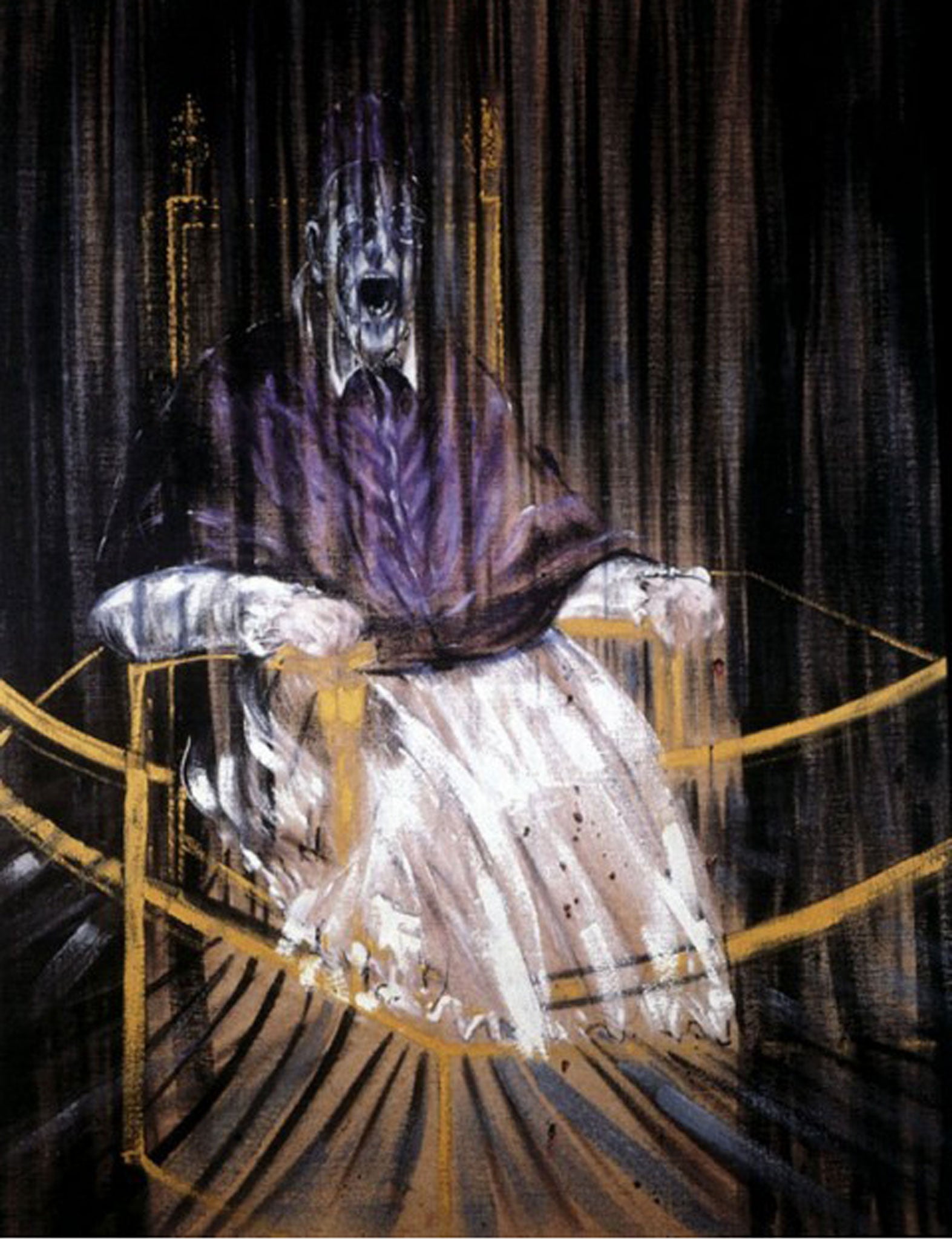
On this, admittedly more difficult and speculative reading, the Pope might be hinting darkly at the difficulties that attend to ascertaining the Church’s trajectory. Do the press releases have an esoteric/exoteric duality? To put it another way, are the statements issuing from (in particular, but not necessarily limited to) the Post-Vatican II Church, susceptible to two readings: one available at the general, public level, the other only available to the few, initiated into the secret purposes at play?[12]


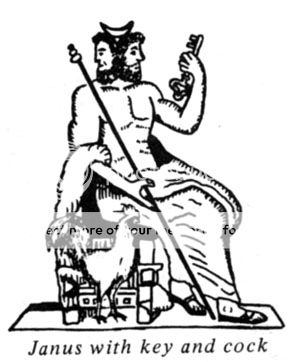
Is the Church currently two-faced, like the Roman god Janus - another time deity?


Tillich, pictured on the Time cover next to a human skull, had inspired the so-called “Death of God Theology.”[13]


The idea of the “death of god,” in this context, can be traced back to the German philosopher Friedrich Nietzsche, who in his Die fröhliche Wissenschaft wrote:[14] “…Gods, too, decompose! God is dead! God remains dead! And we have killed him! How can we console ourselves, the murderers of all murderers?! The holiest and the mightiest thing the world has ever possessed has bled to death under our knives: who will wipe this blood from us? With what water could we clean ourselves? What festivals of atonement, what holy games will we have to invent for ourselves? Is the magnitude of this deed not too great for us? Do we not ourselves have to become gods merely to appear worthy of it? There was never a greater deed - and whoever is born after us will on account of this deed belong to a higher history than all history up to now!”[15]

“‘This thing all things devours: Birds, beasts, trees, flowers; Gnaws iron, bites steel; Grinds hard stones to meal; Slays kings, ruins town, And beats high mountains down.’ Poor Bilbo sat in the dark thinking… His tongue seemed to stick in his mouth; he wanted to shout out: ‘ Give me more time! Give me more time! But all that came out with a sudden squeal was: ‘Time! Time!’”[16]


“[H]is last riddle, delivered when he thinks ‘the time had come to ask something hard and horrible,’ derives from a poem in Old English, the riddle-game, or more precisely the wisdom-testing exchange, between Solomon and Saturn.


“In this, Saturn, who represents heathen knowledge, asks Solomon, ‘What is it that …goes on inexorably, beats at foundations, causes tears of sorrow …into its hands goes hard and soft, small and great?’ The answer given in Solomon and Saturn is, not ‘Time’ as in Bilbo’s desperate and fluky reply, but ‘Old Age’: ‘She fights better than a wolf, she waits longer than a stone, she proves stronger than steel, she bites iron with rust: she does the same to us.’”[17]

"In our solar system, the Law of Octaves is the overall pattern of harmony in the universe expressed as a seven-stepped formula embedded in our solar system. The first seven notes of the musical scale represent our progress through the planets... In our solar system, [the] eighth note is Saturn, the one planet the alchemists considered both the beginning and end, the alpha and the omega of our transformation."[18]


"And now I must tell you its real purpose, which we have managed, with great difficulty, to keep secret from the general public. You would have been given all the facts as you approached Saturn; this is a quick summary to put you into the picture. Full briefing tapes will be dispatched in the next few hours. Everything I am about to tell you has the highest security classification.

"Two years ago, we discovered the first evidence for intelligent life outside the Earth. A slab or monolith of hard, black material, ten feet high, was found buried in the crater Tycho. Here it is. ...

"The most astonishing thing about this object is its antiquity. Geological evidence proves beyond doubt that it is three million years old. It was placed on the Moon, therefore, when our ancestors were primitive ape-men.

"After all these ages, one would naturally assume that it was inert. But soon after lunar sunrise, it emitted an extremely powerful blast of radio energy. We believe that this energy was merely the by-product - the backwash, as it were - of some unknown form of radiation, for at the same time, several of our space probes detected an unusual disturbance crossing the Solar System. We were able to track it with great accuracy. It was aimed precisely at Saturn."[19]

Notes:


[1] Scholar Moshe Idel has continued and extended this line of inquiry with his Saturn's Jews: On the Witches' Sabbat and Sabbateanism, London: Continuum, 2011.

[2] Eric Zafran, “Saturn and the Jews,” Journal of the Warburg and Courtauld Institutes, vol. 42, 1979,p. 16; citing Raymond Klibansky, Erwin Panofsky and Fritz Saxl, Saturn and Melancholy: Studies in the History of Natural Philosophy, Religion and Art, London: Nelson; New York: Basic Books, 1964, pp. 161, n. 115, 132 and 121; Alcabitius, Introductorium maius, MS at Oxford, Bodl. Marsh 663; and J. W. Appelius, Historisch-moralischer Entwurff der Temperamenten, 2nd ed., 1737. St. Augustine speaks of “[s]ome [who] say that [God] is Saturn” and he notes the possibility that this identification results from “the sanctification of the Sabbath; for those men assign that day to Saturn.” Harmony of the Gospels, book 1, chapt. 23, section 30; see Augustine of Hippo, The Harmony of the Gospels, Catholic Primer Reference Series, <http://www.catholicprimer.org/>.

[*] Zafran, op. cit., p. 16; citing Lynn Thorndike, A History of Magic and Experimental Science, New York: Columbia Univ. Press, 1934, vol. 7, pp. 145-6 and Emma Jung and Marie Louise von Franz, The Grail Legend, New York: Putnam; Carl G. Jung Foundation for Analytical Psychology, 1970, pp. 205-6.

[3] “Saturn’s Strange Hexagon,” NASA [got] gov, Mar. 27, 2007, <http://www.nasa.gov/mission_pages/cassini/multimedia/pia09188.html>.)

[4] A.k.a. the “Shield of David,” Magen David or even the Seal of Solomon. It is an alchemical sigil having nothing to do with King David of the Bible. “It was ‘bequeathed’ to rabbinic leaders in the 14th century by the hermeticist King Charles IV of Bohemia, and formally adopted as ‘the Star of David’ in 1898 at the Second Zionist Congress in Switzerland.” Michael Hoffman, Judaism Discovered, Coeur d’Alene, Idaho: Independent History and Research, 2008, p. 784; citing Wolf Gunther Plaut, The Magen David: How the Six-Pointed Star Became an Emblem for the Jewish People, Washington, D.C: B’nai B’rith Books, 1991.

[5] Paul Tillich; quoted by Elisabeth Siftonm, The Serenity Prayer: Faith and Politics in Times of Peace and War, New York: W. W. Norton and Co., 2005, p. 160; archived online at <https://books.google.com/books?id=uiabWkyU7yEC&pg=PA160>.)

[6] Cf. “The god of this age has blinded the minds of unbelievers, so that they cannot see the light of the gospel that displays the glory of Christ, who is the image of God.” The Holy Bible, 2 Corinthians chapter 4, verse 4, New International Version.

[7] Ibid. The Biblical God, Yahweh, is indeed sovereign over linear history. But this is evidently not Tillich’s meaning, since he explicitly espouses a sort of Nietzschean perspectivalism, from which contemporary “situation ethics” proceeds. “Afraid of missing the eternal truth, [some theological systems] identify it with some previous theological work, with traditional concepts and solutions, and try to impose these on a new, different situation. They confuse eternal truth with a temporal expression of this truth. This is evident in European theological orthodoxy, which in America is known as fundamentalism. When fundamentalism is combined with an antitheological bias, as it is, for instance, in its biblicistic-evangelical form, the theological truth of yesterday is defended as an unchangeable message against the theological truth of today and tomorrow. Fundamentalism fails to make contact with the present situation, not because it speaks from beyond every situation, but because it speaks from a situation from the past. It elevates something finite and transitory to infinite and eternal validity. In this respect fundamentalism has demonic traits. It destroys the humble honesty of the search for truth, it splits the conscience of its thoughts adherents, and it makes them fanatical because they are forced to suppress elements of truth of which they are dimly aware.” Paul Tillich, Systematic Theology, vol. 1, Chicago: Univ. of Chicago Press, [1951] 1973, p. 3; archived online at <https://books.google.com/books?id=WIyz0mYxAwkC&pg=PA3>.

[8] Dotty Brown, “Pope Francis Makes Surprise Stop To Bless Sculpture Symbolizing Catholic Unity With Jews,” Forward, Sept. 28, 2015, <http://forward.com/news/321629/pope-francis-makes-surprise-stop-to-bless-sculpture-symbolizing-catholic-an/>.

[9] Jay Michaelson, “Is Pope Francis Backpedaling on Gays?” Daily Beast, Nov. 18, 2014, <http://www.thedailybeast.com/articles/2014/11/19/the-vatican-s-stealth-anti-gay-conference.html?source=dictionary>.

[10] The Holy Bible, 2 Corinthians chapter 6, verse 15, New International Version.

[11] Peter Kosso, Appearance and Reality: An Introduction to the Philosophy of Physics, New York and Oxford [U.K]: Oxford Univ. Press, 1998, pp. 124 and 150.

[12] See Craig Heimbichner, Blood on the Altar: The Secret History of the World’s Most Dangerous Secret Society, Coeur d’Alene, Idaho: Independent History and Research, 2006. For a visual hint, see Francis Bacon, Study after Velázquez’s Portrait of Pope Innocent X, 1953; archived online at <https://en.wikipedia.org/wiki/Study_after_Vel%C3%A1zquez’s_Portrait_of_Pope_Innocent_X>.

[13] According to his widow, Hannah (née Werner-Gottschow), Tillich was also a philanderer who had encouraged his bride to enter into an “open marriage” (i.e., a “marriage” in which - ostensibly, anyway - both partners agree to jettison the mutual promise of fidelity). Hannah wrote: “He had left me often, flirting with other women, leaving each one of the in turn for another at the succeeding dinner party. Hannah Tillich, From Time to Time, New York: Stein and Day, 1973, p. 145; archived online at <https://books.google.com/books?id=Qr0vAQAAIAAJ>.

[14] “The Gay Science,” Chemnitz, Germany: Ernst Schmeitzner; New York: E. Steige, 1882. For more on the “gay science,” see Michael A. Hoffman, “Of Human Alchemy and the Gay Science,” Revisionist Review [weblog], Aug. 4, 2012, <http://revisionistreview.blogspot.com/2012/08/of-human-alchemy-and-gay-science.html>. See also here, here, here and here.

[15] Friedrich Nietzsche, Nietzsche: The Gay Science: With a Prelude in German Rhymes and an Appendix of Songs, Bernard Williams and Josefine Nauckhoff, eds., Cambridge [U.K.]: Cambridge Univ. Press, 2001, p. 120; archived online at <https://books.google.com/books?id=Vf8KETLiKXMC&pg=PA120>.

[16] J. R. R. Tolkien, The Hobbit, reprint ed., New York: Ballantine, 1988, pp. 77-78.

[17] Carl Runyon, “Bilbo’s Riddle-Exchange with Gollum,” n.d., <http://legacy.owensboro.kctcs.edu/crunyon/Tolkien/hobbit/riddle%20exchange.htm>. Saturn - as “Father Time” - does indeed represent old age and senescence.

[18] Dennis William Hauck, The Complete Idiot's Guide to Alchemy, New York: Alpha; Penguin, 2008, p. 125.

[19] Arthur Charles Clarke, 2001: A Space Odyssey, reprint ed., New York: New American Library, 1993, p. 159; archived online at <http://www.angelfire.com/blog2/endovelico/ArthurC.Clark-2001.pdf> and <https://books.google.com/books?id=d967AAAAIAAJ>. Of course, in the movie, Saturn was changed to Jupiter. See Leonard F. Wheat, Kubrick's 2001: A Triple Allegory, Lanham, Md. and London: Scarecrow Press, 2000, p. 32; archived online at <https://books.google.com/books?id=CswtVpuwbEQC>.

Saturday, September 19, 2015

Jesus 'Defended a Woman From Being Slut-Shamed'?


This latest Facebook Polemic is a farrago of contemporary slang applied anachronistically to first-century Palestine - as well as it is full of irresponsible eisegesis.

Among its several errors, the most obvious – and egregious – example of misreading appears in the phrase “Defended a woman from being slut shamed and killed…”

According to an online edition of the Oxford English Dictionary, the word “slut shame” designates an act of: “Stigmatiz[ing] (a woman) for engaging in behavior judged to be promiscuous or sexually provocative”. Example sentences are given as: “she was slut-shamed for wearing a bikini” and “you can’t talk about sex without getting gossiped about or slut-shamed”.

Presumably, the author of the above picture-text has in mind the episode, recorded by John the Evangelist (John 8:1-11), of the “woman caught in the act of adultery.”[1]

Here is the entire relevant passage, from the New International Version [2]of the Bible:

[B]ut Jesus went to the Mount of Olives. At dawn he appeared again in the temple courts, where all the people gathered around him, and he sat down to teach them. The teachers of the law and the Pharisees brought in a woman caught in adultery. They made her stand before the group and said to Jesus, “Teacher, this woman was caught in the act of adultery. In the Law Moses commanded us to stone such women. Now what do you say?” They were using this question as a trap, in order to have a basis for accusing him. But Jesus bent down and started to write on the ground with his finger. When they kept on questioning him, he straightened up and said to them, “Let any one of you who is without sin be the first to throw a stone at her.” Again he stooped down and wrote on the ground. At this, those who heard began to go away one at a time, the older ones first, until only Jesus was left, with the woman still standing there. Jesus straightened up and asked her, “Woman, where are they? Has no one condemned you?” “No one, sir,” she said. “Then neither do I condemn you,” Jesus declared. “Go now and leave your life of sin.”

One question is this: If the story of the woman caught in adultery is illustrative of the injustice in a certain sort of “judgmentalism,” what sort of “judgment” is supposed to be forbidden?

The story suggests the following moral argument.

(1) Adultery is morally wrong. [moral premise]

(2) “[T]his woman was caught in the act of adultery.” [observational premise]

(3) Therefore, “this woman” has done something morally wrong. [theoretical conclusion]

(4) Women who have committed adultery should be “stoned” (to death). [punitive premise]

(5) Therefore, “this woman” should be stoned (to death). [practical conclusion]

At what step does Jesus intervene?

Notice that Jesus never disputes the wrongness of adultery. He never questions the moral premise. In fact, Jesus endorses it.

This is apparent from the fact that Jesus concludes his comments to “the woman” with the admonition: “Go now and leave your life of sin.”[3]

If the woman is commanded to “leave [her] life of sin,” then, manifestly, she is presently leading a life of sin. The only relevant information that we have about her life is that she is an adulteress. Therefore, Jesus is either (and implausibly) speaking of “other,” unspecified sins, or Jesus is speaking of her adultery as a sin.

Indisputably, the most natural reading of the text is that Jesus is here saying that the woman’s adulterous behavior is tantamount to “leading a life of sin.” But, if so, then Jesus is acknowledging that adultery is morally wrong.

We may conclude, then, that Jesus accepted the Pharisee’s labeling of the relevant woman. She was an adulteress, with the entire “stigma” that that term implied.

However, if “slut shaming” is characterized by “stigmatiz[ing] (a woman) for engaging in behavior judged to be promiscuous or sexually provocative,” and if adultery is included among the list of behaviors “judged to be promiscuous or sexually provocative,” then it follows that Jesus was “slut-shaming.”

In the opinion of this writer, “slut-shaming” is a ridiculous and faddish slang term and should be avoided. Jesus’s ultimate purpose was to point “the woman” toward the road of salvation. The politically-incorrect fact is that repentance – or the turning-away from sin and toward God – can only be effected once one acknowledges his or her own sinfulness.

Those who wish to employ “weasel words” like “shaming” such that all (or some subset of) violations of God’s laws may not, for fear of breach of social etiquette, be labeled “sins,” really do disservice to sinners. Insofar as charity (i.e., Christian love) is concerned, it is impossible for a person to express genuine love for John Doe if that person encourages – implicitly or explicitly – John Doe to continue in behavior that will lead to the eternal damnation of his immortal soul.

This, however disagreeable the sentiments may be to the “liberal” mind, is simply the historic Christian view.

In his Quest for the Historical Jesus,[4] Albert Schweitzer criticized those scholars whose attempts to “discover the historical Jesus” merely amounted to the creation of a Jesus in the image of the particular scholar who happened to be writing.

“Modern scholars have routinely reinvented Jesus or have routinely rediscovered in Jesus that which they want to find, be it rationalist, liberal Christianity of the 19th century, be it apocalyptic miracle workers in the 20th, be it revolutionaries, or be it whatever it is that they’re looking for, scholars have been able to find in Jesus almost anything that they want to find.”[5]

Actually, this is not new. In the Second Epistle to Timothy, in the Bible, we read: “For the time will come when people will not put up with sound doctrine. Instead, to suit their own desires, they will gather around them a great number of teachers to say what their itching ears want to hear.”[6]

It is therefore unsurprising that embedded within this “liberal”-biased Facebook Polemic is a “liberal”-colored misunderstanding (if not willful misrepresentation) of a particular biblical episode.

Jesus did oppose the hypocritical Pharisee’s attempt to summarily execute the adulteress. He thus did indeed oppose (what I labeled) the “practical conclusion,” as given in the argument above.

Jesus counseled the woman to quit her adulterous behavior and turn to God in repentance. The Pharisees were out to satiate their bloodlust. However, neither position invalidated – or even called into question – the moral impermissibility of adultery.

Notes:


[1] I have discussed this passage at length elsewhere. See here and here.

[2] The New International Version, being a sort of “dynamic equivalence” translation, is simply easier to understand than “classics” such as the Catholic Douay–Rheims and the Protestant King James Version. Nothing substantial, therefore, turns on my selection. It is merely for the sake of convenience.

[3] Far from negating the moral premise, Jesus elsewhere extends it. “You have heard that it was said, ‘You shall not commit adultery.’ But I tell you that anyone who looks at a woman lustfully has already committed adultery with her in his heart. If your right eye causes you to stumble, gouge it out and throw it away. It is better for you to lose one part of your body than for your whole body to be thrown into hell. And if your right hand causes you to stumble, cut it off and throw it away. It is better for you to lose one part of your body than for your whole body to go into hell.” (Matthew 5:27-30.)

We see, then, that Jesus not only “accepts” the notion of the sinfulness of physical acts of adultery, but he broadens the definition to encompass instances of adulterous fantasizes. Furthermore, he indicates one, ultimate punishment: hell. This does not appear at all consistent with the notion that Jesus denies the sin of adultery.

[4] Albert Schweitzer, Geschichte der Leben-Jesu-Forschung, Tübingen: Mohr, 1906; in English as Albert Schweitzer, The Quest of the Historical Jesus, Francis Crawford Burkitt, ed., William Montgomery, transl., London: A. and C. Black; New York: Macmillan, 1910.

[5] Shaye I.D. Cohen; interviewed in “Searching for Jesus,” Frontline, PBS, <http://www.pbs.org/wgbh/pages/frontline/shows/religion/jesus/searching.html>.

[6] 2 Timothy 4:3.